3DS 2 sparks concerns in merchants and providers alike. The desire to fortify payment-processes without adding more friction is challenging, and gaps still exist between what’s considered optimal and the reality.

In the past, 3DS authentication was performed with an OTP (One Time Passcode). The updated 3DS process aims to reduce false declines and improve user experience all around — creating a faster and more secure checkout experience.
What the EMVco* realized was that online fraud is expanding and companies need to validate the security of transactions and customer identification. The earlier version of 3DS also caused a drop in conversion rates due to unfriendly checkout flows.
Designed around the principles of Strong Customer Authentication (SCA), the significant difference between 3DS 1 and 3DS 2 is that user authentication now uses at least two of the following identification methods: “something the user knows” (e.g., password), “something the user is” (e.g., fingerprint), “something the user owns” (e.g., mobile device).
3DS 2 flow corresponds with the data accumulated from actions the user performs in the device (such as fingerprint authentication, device ID, IP address, and more) and responds accordingly to finalize the user’s authentication.
Strong Customer Authentication (SCA) has become mandatory for all online transactions in Europe. Card Issuers (Banks) need to implement the aforementioned two-factor authentication for all card payments. While some exemptions apply, merchants are advised not to rely on exemption-flows and adhere to the most secure flows to ensure the highest approval rates.
In spite of the challenges, 3DS 2 has many benefits to both merchants and customers. It allows payment providers to send more data to the cardholder’s issuing bank, e.g., device and order history. The bank can use this data for future recognition and prevent recurring requests for the user’s identity authentication, making frictionless authentication a common practice. 3DS 2 also gives buyers more options to authenticate their identities, e.g., via a thumbprint, app-based authentication, or a one-time password. Authenticated transactions end up having a better approval rate in the authorization step.
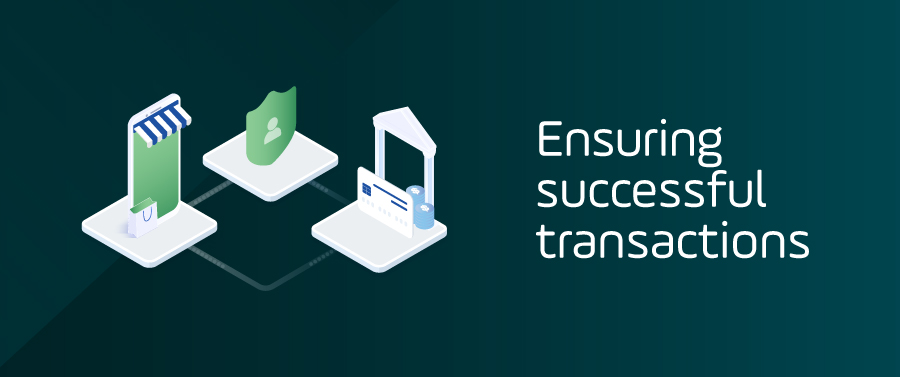
When buyers insert their card information, the merchant receives their request and enrolls them via the relevant 3DS flow.
Once the issuer receives a payment request, they review the contextual data in which it was made– i.e., the type of merchandise within the purchase, the buyer’s shipping location, device type, etc.
At this point, the issuer may deem the information sufficient to approve the transaction. Otherwise, they may request the buyer to prove their identity with additional information.
While most transactions are frictionless – and occur without the buyer’s awareness – the issuer may occasionally request to perform a simple challenge to prove their identity. The issuer decides which challenge that would be — face recognition, fingerprint, a one-time verification code, etc.
After the buyer provides the requested information in the validation step, the issuer then reviews it and decides whether to approve/decline the transaction. The flow is now complete.
3DS 2 is not free from potential downsides, primarily because it’s still in its formation state. Banks, for instance, are required to perform 2-step authentication flows, which means that a one-time passcode is insufficient and requires an additional step, e.g., confirmation via a bank application, fingerprint, face ID, etc. The added step turns out to be tricky, as even the most advanced banks—who have implemented the two-stage verification— can still lose a hefty percentage of transactions due to 3DS.
The new requirements may be foreign to many customers at first and can impact conversion rates and increase abandoned carts at checkout. Failure to complete payment flows can be either due to an unfamiliar authentication process or due to technical difficulties or broken flows at the backend. Our data analysis team recently discovered that many banks did not implement all requirements such as responsive web design, two-factor authentication, and other technological conditions that significantly affected customer experience. Conversion rates due to these gaps have plummeted to 30%-40%.
Exempting users from SCA flow increases the probability of frictionless transactions (i.e., without an additional authentication step) and decreases the chances of user dropouts. Suppose you are a merchant whose business model includes a card-on-file functionality, one-click payments, or recurring payments. In these cases, you can enroll associated transactions via flows that are eligible for exemptions from 3DS. Bear in mind that the decision of whether to grant the exemption lies with the card issuer. Once transactions are exempted, the chargeback liability shifts back to you (as the merchant).
Possible exemptions include:
Implementing 3DS 2 and streamlining procedures will take some time and further adjustments of all parties involved (issuers, banks, customers, and gateways alike). To equip you with the necessary tools and peace of mind, PayU has set up to do the following:
Please make sure to check our Documentation for more information regarding the different scenarios, implementation processes, and requirements needed to ensure your utmost compliance.
* EMVCo is collectively owned by American Express, Discover, JCB, MasterCard, UnionPay and Visa, and was formed in 1999 to enable the development and management of specifications to address the challenge of developing global interoperability and facilitating the adoption of secure technology to combat card fraud, while allowing innovation in the payments industry. More about EMVCo, here.