
Explore how PSPs manage the highs and lows of one of the busiest shopping days worldwide in our analysis of Black Friday 2023.

In the vibrant online business event of Black Friday, where consumers embark on a frenzied quest for the best deals, the unsung hero orchestrating the symphony of transactions is often overlooked—the Payment Service Provider (PSP). As we delve into the technological performance of Black Friday 2023, we explore the crucial role that PSPs play in managing the peaks and troughs of one of the world’s busiest shopping days.
What is the Role of a PSP during peak sales days
Why should you get a robust PSP? How can it influence your business results?
Technological Prowess: PayU GPO didn’t let down its merchants during Black Friday 2023!

Payment Service Providers serve as the backbone of the retail landscape, facilitating secure and efficient transactions between consumers and merchants. Their role becomes particularly pronounced during peak shopping events like Black Friday, where the volume of transactions skyrockets, and the reliability of the payment infrastructure is paramount.
Payment Service providers grapple with several challenges during peak sales days, each demanding careful attention for a smooth and secure payment processing experience.
One of the foremost challenges is the surge in transaction volumes, where the sheer magnitude of transactions during peak sales can strain infrastructure, potentially leading to slowdowns and delays. To address this, PSPs must deploy robust and scalable infrastructure capable of efficiently handling a high number of transactions per second (TPS).
Ensuring infrastructure resilience is another critical aspect, as increased traffic during peak sales events may expose vulnerabilities, risking downtime or disruptions. To mitigate this, PSPs should implement redundancy, load balancing, and conduct regular system audits to enhance overall infrastructure resilience.
The heightened cybersecurity threats during peak sales events pose a significant challenge, with cybercriminals targeting the increased traffic to exploit vulnerabilities and steal sensitive payment information. Robust cybersecurity measures, including encryption, threat detection, and regular security audits, are imperative to safeguard against potential threats.
Load balancing is also a key concern, as uneven distribution of requests can lead to server overload, affecting overall performance. Effective load balancing mechanisms are essential, evenly distributing incoming requests across servers to prevent bottlenecks.
Transaction failures become more likely during peak sales, necessitating strategies to handle failures gracefully. Clear communication to users about transaction status and reasons for declines is crucial for managing customer expectations.
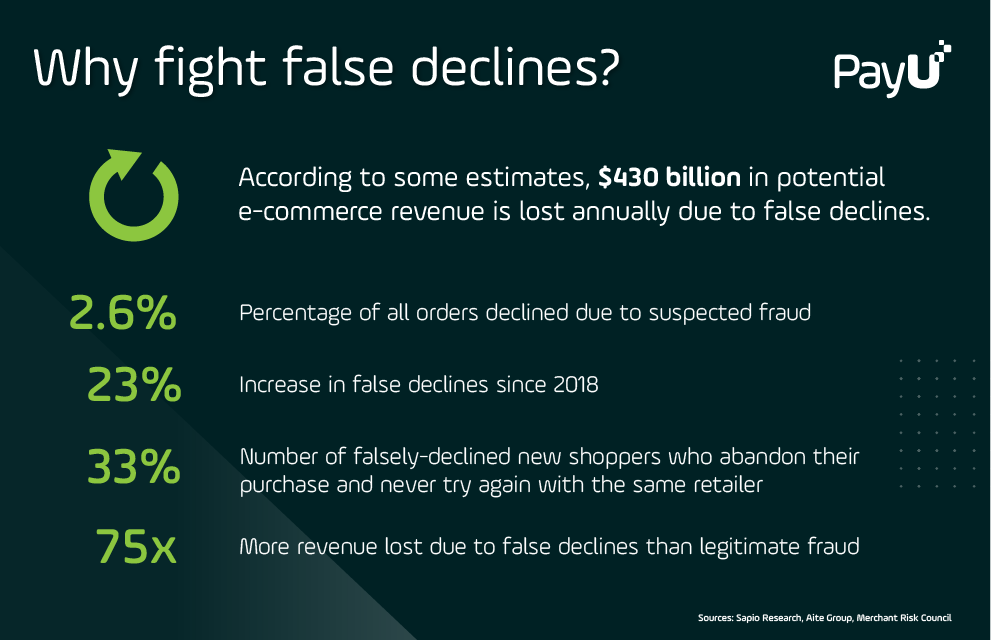
Additionally, the risk of false declines tends to increase as the volume of transactions surges. False declines occur when legitimate transactions are wrongly rejected by the payment system, often due to the system’s attempt to detect fraudulent activity. The challenge lies in distinguishing genuine high-volume transactions from potentially fraudulent ones. Mitigating false declines is crucial to ensure a smooth and satisfactory shopping experience for customers, for example by maintaining a flexible rules engine that allows real-time adjustments during peak sales periods.
The challenge of scalability arises during peak sales, requiring PSPs to quickly scale their operations to meet demand. Investing in scalable infrastructure that can adapt to varying levels of demand and implementing auto-scaling mechanisms is essential.
Addressing these challenges demands a proactive and comprehensive approach, combining advanced technology, stringent security measures, and strategic planning. The goal is to deliver a reliable and secure payment processing service during peak sales days, ensuring a positive experience for both businesses and consumers.
The seamless and rapid processing of transactions ensures a positive and stress-free experience for consumers, highlighting the essential role of PSPs in delivering satisfaction.
For merchants, the ability to handle a colossal number of transactions translates to increased revenue. Additionally, the high approval rates contribute to the success of merchants, not to lose any transactions, reflecting a robust partnership between PSPs and retailers.
The platform uptime is a testament to the reliability, exemplifying the importance of PSPs in maintaining a resilient retail ecosystem, even during peak sales days.
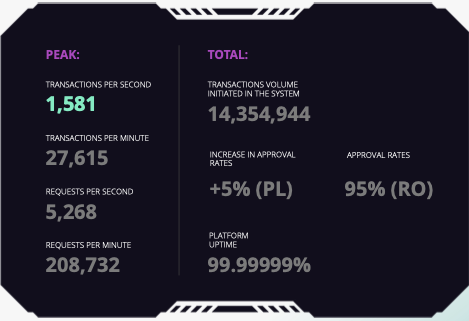
At the peak of the sales frenzy, PayU GPO’s combined platforms recorded astonishing figures, reaching the pinnacle of technological efficiency. The highest transaction per second surged to an impressive 1581, with transactions per minute soaring to 27,615. Concurrently, the request per second peaked at 5268, and the request per minute reached an astounding 208,732. These numbers underscore the robust infrastructure and advanced capabilities that PayU GPO brought to the table during the high-stakes moments of Black Friday.
When we delve into the total transactions volume initiated in the system, the scale of PayU GPO’s operations during Black Friday becomes even more apparent. A staggering 14,354,944 transactions were processed, reflecting the platform’s ability to handle an immense load seamlessly. Notably, in Romania, the approval rate reached an impressive 95%. This highlights PayU GPO’s commitment to delivering optimal approval rates and ensuring that transactions are swiftly approved, contributing to a positive consumer experience, and ensuring merchants not to miss any possible purchase.
A critical aspect of any technological system is its uptime, and PayU GPO sets an exemplary standard with a platform uptime of 99.9999%. This near-perfect uptime speaks volumes about the reliability and stability of the PayU GPO infrastructure. In the volatile landscape of Black Friday, where surges in traffic are the norm, maintaining such a high level of uptime is a testament to the platform’s resilience and preparedness for peak sales days.
The role of a PSP in the e-commerce ecosystem goes beyond processing transactions; it becomes a strategic partner for merchants seeking success in the competitive online retail space. PayU GPO, with its outstanding Black Friday performance, demonstrated not only technical excellence but also its unwavering commitment to providing a seamless and secure payment experience for both merchants and consumers.
Additionally, despite the unprecedented challenges posed by the overload of requests during peak sales days, the sheer volume of transactions handled with an impressive approval rate showcases the platform’s ability to manage high traffic without compromising on efficiency or security. Challenges such as false declines were mitigated effectively, ensuring that genuine transactions were approved promptly.
As e-commerce continues to evolve, the importance of a performant and reliable PSP cannot be overstated. PayU GPO, with its technological marvel exhibited during Black Friday 2023, cements its position as a trusted partner for merchants navigating the complexities of the online retail landscape. The numbers tell a story of efficiency, reliability, and a commitment to excellence, making PayU GPO a beacon of technological brilliance in the world of digital payments.
Concluding on Black Friday 2023, the technological performance of PayU GPO emerges as a defining factor in the success of the retail event. Beyond the numbers, it tells a story of reliability, resilience, and a commitment to providing both consumers and merchants with a seamless journey through the digital marketplace.
In this tech symphony, PSP plays a pivotal role, harmonizing the chaos of Black Friday and paving the way for a future where technology and retail seamlessly converge. The standing ovation is not just for the numbers but for the excellence, innovation, and foresight that PSP brings to the world of payments and commerce. The tech symphony of Black Friday is not just a performance; it’s a testament to the transformative power of technology in shaping the future of retail.